Why Lancaster Booklet Printing Matters for Your Next Project
When you need printed materials that represent your business, event, or creative work, the quality of the booklet often speaks louder than the words inside. I have spent years working with print buyers across Lancaster, and the one thing that consistently separates a good booklet from a great one is the level of care put into production. Local expertise, reliable equipment, and a clear understanding of finishing options make all the difference.
Think about the last time you picked up a program at a conference or a training manual at a workshop. The feel of the paper, the crispness of the images, the way the pages turned, those details shaped your impression of the organisation behind it. That is where professional booklet printing becomes essential, not just as a commodity but as a strategic tool for communication.
Getting the Foundations Right
Before any ink hits paper, the file preparation stage determines the final result. One of the most common mistakes I see is files that lack proper bleed. For booklets, bleed is the extra area beyond the trim line that ensures your background colour or image extends to the very edge of the page. Without it, any slight shift in trimming leaves a white sliver along the edge. A good printer will check for this, but it saves time and money if you set up your file correctly from the start. The standard bleed is 3mm on each side, and it is best to supply your artwork as a high-resolution PDF file format with all fonts embedded. That keeps everything consistent from your screen to the finished piece.
I have seen designers compress images too much to reduce file size, only to be disappointed when the printed result looks soft. For full-color printing, aim for 300 dpi resolution on all images. Text and vector elements should be sharp at any size, but bitmapped images need that density to reproduce well on paper. If you are unsure about your file, a quick preflight check by the printer can catch issues before they become expensive mistakes.
Binding Options and Their Real-World Uses
The way a booklet is bound affects both its durability and how it lays open. Two methods dominate the field: saddle stitching and perfect binding. Saddle stitching uses wire staples through the fold line. It works best for booklets up to around 48 pages. Event programs, short training manuals, and product guides often use this method because it keeps costs low and allows the booklet to lie flat when opened. I have used saddle stitched booklets for portfolios that needed a clean, professional look without adding bulk.

Perfect binding, on the other hand, uses a glue-based spine. You see it on thicker booklets, annual reports, and high-end marketing collateral. The pages are gathered, the spine is roughed up for glue adhesion, and a cover is wrapped around the whole block. This gives a polished, book-like finish that stands up to repeated handling. For a portfolio presentation or a comprehensive training manual, perfect binding signals quality. The trade-off is that the booklet does not stay open flat on its own unless you break the spine, but for many applications that is a small price to pay for the professional look.
Cover Choices That Set the Tone
The cover is the first thing someone touches. A glossy cover makes colours pop and photographs look vibrant. It is ideal for marketing collateral where you want to grab attention. But glossy finishes show fingerprints and can reflect light in ways that make reading difficult under certain angles. A matte finish feels softer and more sophisticated. It reduces glare, hides smudges better, and gives a tactile, premium feel. I often recommend matte for corporate branding materials, white papers, and portfolios where the content should take centre stage rather than the shine of the paper.
Some projects benefit from a combination, a matte cover with a spot gloss highlight on a logo. That is a technique best discussed with your printer early, because it affects both layout and cost. The key is to match the finish to the purpose. A glossy cover can sell a product; a matte cover can sell expertise.
Equipment Matters
Not all print shops are created equal. The machines behind the scenes determine the consistency and quality of the final product. Heidelberg presses are a benchmark in offset printing, known for precise colour registration and solid ink coverage. For longer runs, offset printing on a Heidelberg press gives the best cost-per-page and colour fidelity. For shorter runs or variable data needs, Xerox digital printers offer fast turnaround and the ability to personalise each copy. I have run projects where we printed 50 copies of a training manual with digital, then reprinted the same file on offset for a run of 5,000. Both had excellent results, but the process was different.
Understanding the difference between offset and digital helps you make smarter decisions. Offset printing uses plates and wet ink. It is more expensive to set up but cheaper per copy at higher quantities. Digital printing is toner-based, with no plate costs, making it ideal for runs under 500 copies. Some shops also offer hybrid approaches, printing the body digitally and the cover offset for the best of both worlds.
For businesses based in Lancaster, working with a local printer that operates both types of equipment gives you flexibility. You can test a short run digitally, get feedback, and then commit to a larger offset run without changing the file. That is where Lancaster booklet printing becomes a strategic advantage, you have access to experienced operators who understand the nuances of both technologies.

Quality and Standards
Print quality is not just about looking good. It is about consistency across the run and repeatability over time. Many professional printers adhere to ISO standards for colour management and production processes. ISO 12647, for example, defines the colour characteristics for offset printing. When a printer follows these standards, you can expect the same colour from proof to production and from one reprint to the next. That matters when you are producing marketing collateral that needs to match your corporate branding across multiple pieces.
I have worked with shops that do not follow any colour standard, and the results are unpredictable, one batch comes out warm, the next cool. For a brand that has spent years building a specific shade of blue or green, that inconsistency is damaging. Asking your printer about their colour management approach is a reasonable question before you place an order.
Practical Applications
The versatility of booklets means they appear across many industries. Event programs for conferences, galas, or theatre productions rely on clear layouts and durable binding because people refer to them throughout the event. Training manuals need to withstand being flipped through repeatedly, often with notes written in the margins. A saddle stitched booklet with a laminated cover works well here. Portfolio presentation booklets for photographers, architects, or designers require flawless colour reproduction and a cover that feels substantial. Perfect binding with a matte finish is a common choice.
For trade printing, where a print shop produces work for other businesses or agencies, turnaround time and communication are critical. Local shops in Lancaster often offer local delivery, which can save days compared to shipping from a distant facility. If you need a last-minute revision or a reprint, having the printer within driving distance makes the process smoother.
I remember a client who needed 300 booklets for a product launch. They had used an online-only printer for years and were frustrated by shipping delays and colour mismatches. When they switched to a Lancaster-based printer that offered Lancaster booklet printing with a local contact, their stress dropped. They could approve a proof in person, ask questions about paper stock, and have the finished boxes delivered the same week. That kind of support is hard to replicate with a faceless web form.
Making the Right Call
Choosing a booklet printing partner comes down to three things: the quality of their equipment, their understanding of finishing options, and their willingness to communicate. A printer that asks about your audience, your distribution method, and your timeline is a printer that will help you avoid problems. Whether you need 50 copies of a prototype or 10,000 copies of a catalogue, the same principles apply. Start with a clean PDF file with proper bleed. Decide on binding based on page count and usage. Pick a cover finish that matches the message. And work with a shop that has the right gear and the experience to use it well.
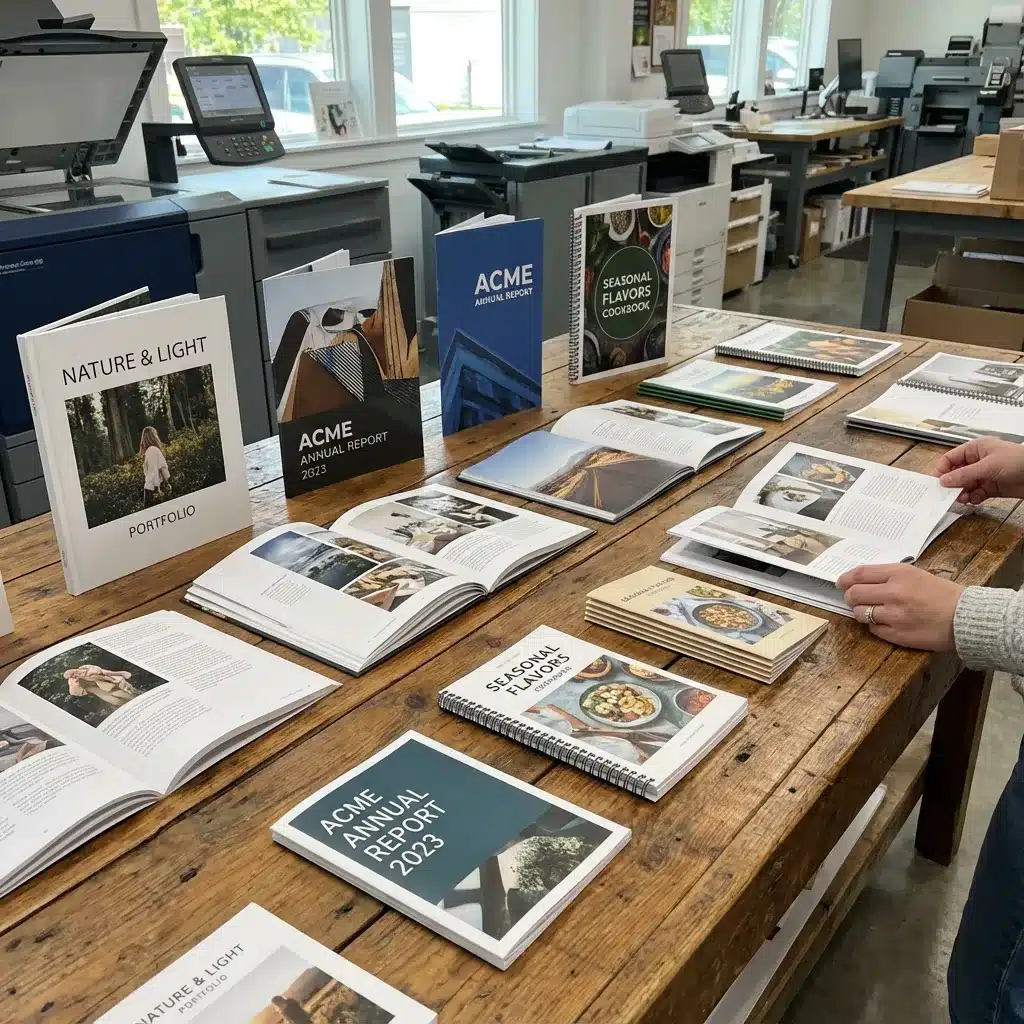
In Lancaster, the printing community is small enough that reputation matters. Shops that invest in Heidelberg presses and Xerox digital printers, that follow ISO standards, and that offer both saddle stitching and perfect binding, tend to be the ones that deliver consistently. They also tend to be the ones that value custom booklet printing as a craft, not just a transaction. That is the kind of partner that helps your project look its best, whether it is a glossy event program or a matte training manual.
Next time you plan a printed piece, take a moment to think about the details that matter to your audience. The binding, the finish, the colour consistency, each one communicates something about your organisation. With the right approach and a reliable local printer, Lancaster booklet printing can turn a simple booklet into a powerful piece of communication.